For pondok, madrasah & community religious schools
Pondok management system — kitab classes, fees and waris in one place
SMP-Elite is a school management system for pondok and madrasah in Malaysia. The mudir (head) and administrators keep student and waris (guardian) records, arrange kitab classes or halaqah (study circles), collect monthly, hostel and meal fees with official receipts, record daily attendance and message waris, all on the web and an Android app. Try it for 30 days, no credit card.
No contract · No credit card · Your data stays even if your subscription ends
The reality of a pondok
What is different about managing a pondok?
A pondok does not run like an ordinary school. Students come from different ages and backgrounds, study kitab (classical Islamic texts) at different levels, many live in the hostel, and their waris are often far away in another state. Fees are rarely a single figure: there are monthly fees, hostel and meal charges, and some students are supported because they are orphans or from families in hardship.
This kind of administration usually ends up scattered across log books, Excel and WhatsApp groups. SMP-Elite does not change how your pondok teaches. It only organises the admin, so the mudir knows who is enrolled, who has paid, and which waris need a call.
This page explains how the features fit a pondok. If you run a tahfiz maahad focused on Quran memorisation, read the tahfiz school management system page as well.
Students and classes
How do you arrange students of different ages into kitab classes and halaqah?
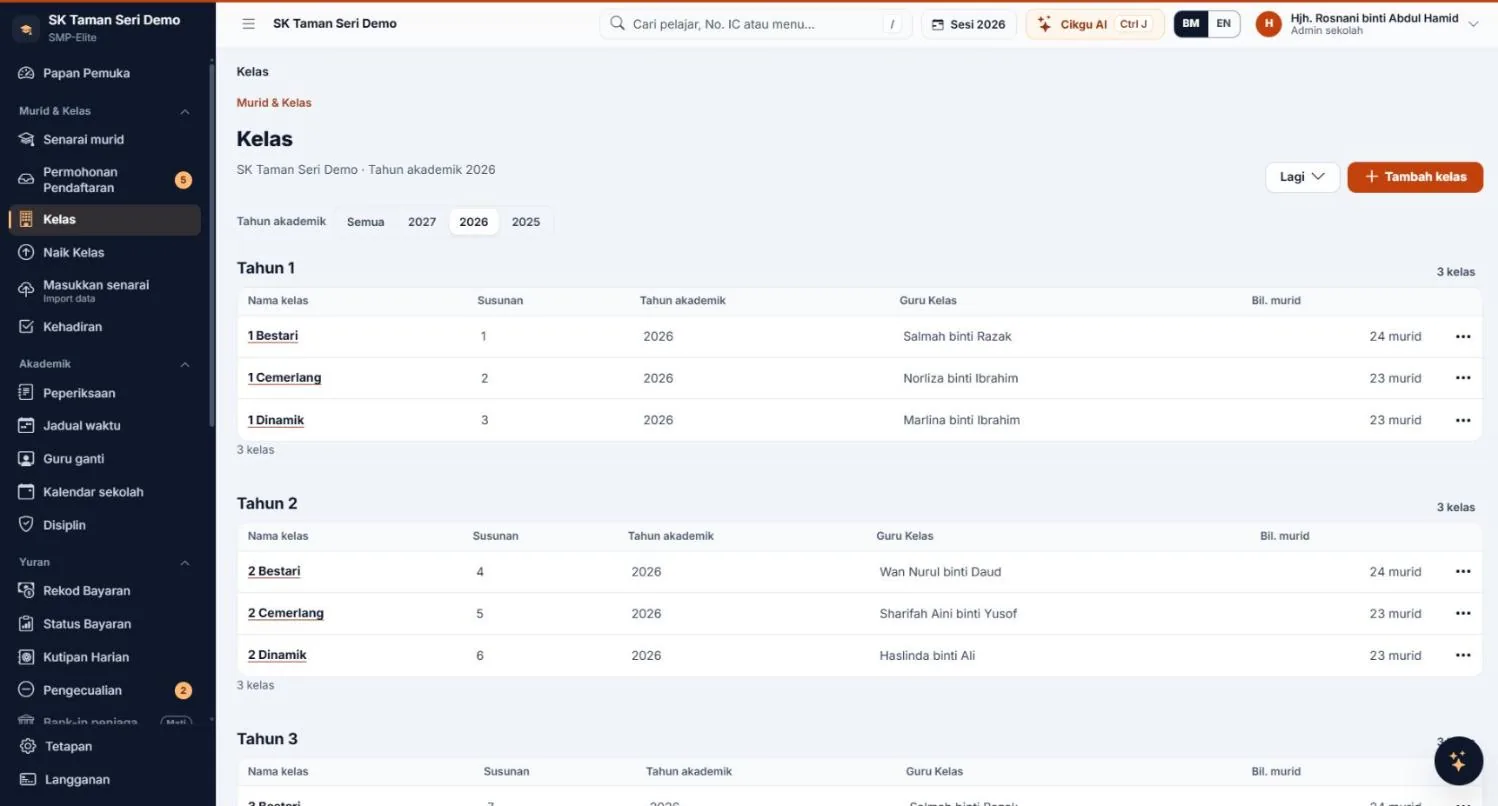
In the system, every learning group is a "class", and the pondok chooses the class names. You can name them after a kitab, a level or a particular ustaz's halaqah, instead of being stuck with "Form 1" or "Year 2".
- Students of mixed ages. A student can be placed in the class that suits his or her level, regardless of age.
- Student and waris records. One record holds the student's details, the waris's phone number and the current class.
- Moving up a level. When a student moves on to the next kitab class, the record is updated and the fee and attendance history is kept.
- Different roles. The mudir and clerk see every student, while an ustaz only sees the classes assigned to him.
The system manages classes and students, not the content of your studies. See "What is not in SMP-Elite" below.
Pondok fees
How do you handle separate monthly, hostel and meal fees?
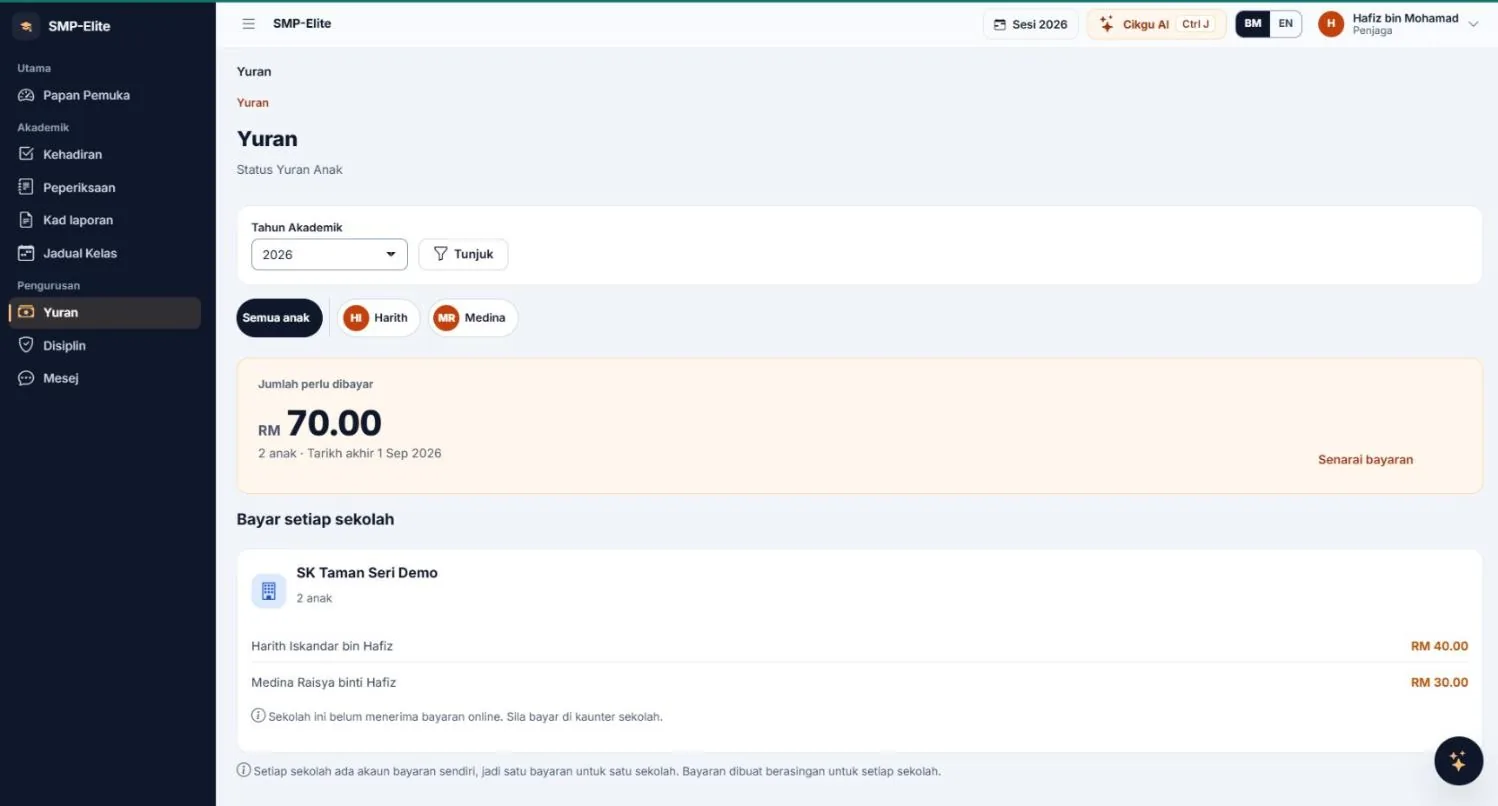
Every pondok sets its fees in its own way. SMP-Elite lets you create your own fee items, so different charges do not have to be lumped into one amount:
- Separate items. Monthly, hostel and meal fees each have their own amount and bank account. Waris see exactly what they are paying, and the mudir sees how much is still outstanding for each item.
- Numbered official receipts. Every payment gets a receipt that cannot be deleted. It can only be cancelled with a reason.
- Partial payments. A waris who can only pay part is served at the counter. The money is applied to the oldest fee first and the receipt shows the balance.
- An arrears chase list with polite WhatsApp messages, so the mudir does not have to remember who has not paid for which month.
Contributions and exemptions
How are orphans and asnaf students handled, and how do distant waris pay?
Fee exemptions. For orphans or asnaf (low-income, eligible-for-aid) families, an administrator approves an exemption for the chosen items and period. Months already paid are not changed. The category is not shown to teachers, other waris or on the receipt, so the family's dignity is protected.
This is a fee exemption inside the system, approved by the pondok's administrator. It is not linked to any zakat institution, and the system does not manage zakat distribution.
Waris in another state. Waris pay by FPX from their phones (ToyyibPay or CHIP), the money goes straight into the pondok's own merchant account, and an official receipt is sent to them. The mudir does not have to wait for transfer slips on WhatsApp. Transaction charges depend on the gateway and the pondok's agreement with the provider.
Attendance and waris
How do you record daily attendance and reach waris?
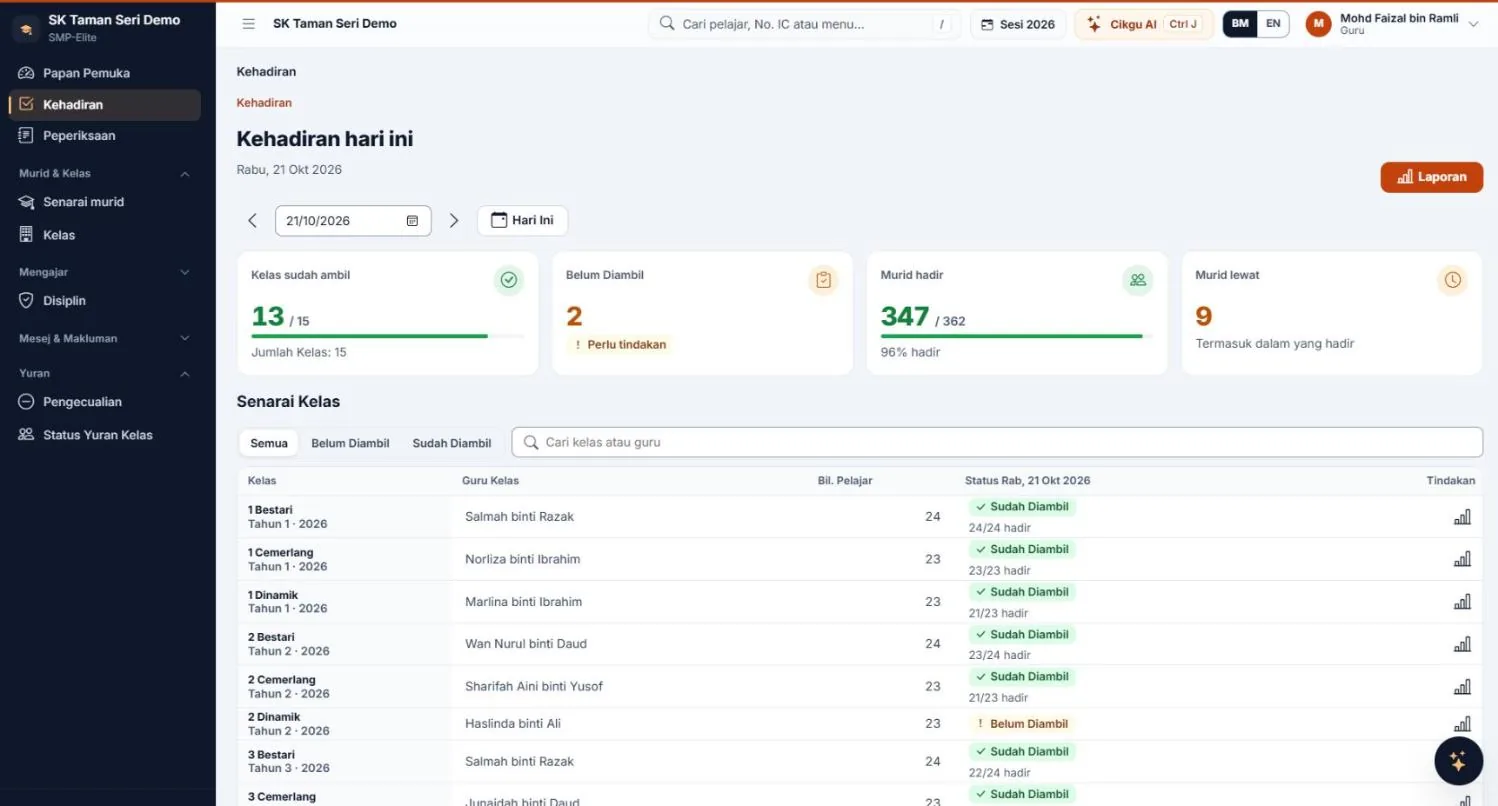
Ustaz mark attendance for each class straight from their phones, through the Android app or the web browser. The mudir can then see the day's attendance without collecting papers from every halaqah.
For waris, messages and reminders are sent through the system, and waris can check their child's fees from the web portal or the Android app. A pondok whose waris are spread across many states gets one clear channel instead of dozens of separate chats.
If the pondok holds written kitab tests, marks can be entered in the Exams module. Exams and Messages are included in the Basic plan.
How to get started
How do you move your student list from Excel or CSV?
Nothing to install on a pondok server. It all runs in a web browser, and you can stop at any step to ask the developer.
- 1
Register the pondok
Enter the pondok name and e-mail, then confirm with an OTP code. 30-day trial, no credit card.
- 2
Import your list
Download the template, fill in students and waris in Excel, save as CSV and upload. The system checks each row before saving.
- 3
Arrange classes
Create kitab classes or halaqah under your own names, place students and invite the ustaz.
- 4
Set up fees
Create monthly, hostel and meal items, choose bank accounts, and start collecting at the counter or online.
How much does a pondok management system cost?
Pondok with 180 students: Basic plan RM199 a month (or pay 10 months for a full year) — the same price for any school under 1,000 active pupils.
Basic adds the Fees, Attendance, Exams and Messages modules to the Core plan (RM79 a month, without the fees module). The Full plan at RM299 a month includes every module except e-Invoice. Schools with 1,000 or more active pupils pay × 1.5.
The 30-day trial uses every Full plan module (e-Invoice excluded). No credit card, no contract. See the pricing page.
Honest from day one
What is not in SMP-Elite, and who is it for?
A good fit if you
- Are the mudir or administrator of a pondok or madrasah and want student, fee and attendance records in one place.
- Still track fees with log books, Excel or WhatsApp.
- Want distant waris to pay online and receive official receipts.
- Want your data to stay the pondok's and exportable to Excel.
Not in this system
- Modules for memorisation, tasmik (recitation checking) or kitab learning progress. SMP-Elite is a school management system.
- Zakat management or distribution of contributions. A fee exemption is only a decision by the pondok's administrator.
- No internet access at all at the pondok? The system is web-based with an Android app.
Questions mudirs and pondok administrators ask
Tap a question to open the answer.
How much does a pondok management system cost?
For a pondok with 180 students, the Basic plan is RM199 a month, or pay 10 months for a full year. The price is the same for any school under 1,000 active pupils. Basic covers Fees, Attendance, Exams and Messages. 30-day trial, no credit card.
Can students of different ages and levels be placed in different classes?
Yes. The pondok chooses its own class names, so kitab classes or halaqah can be created by level, and each student is placed in the class that suits him or her. Age is not tied to a particular school year.
Can we separate monthly, hostel and meal fees?
Yes. The pondok creates its own fee items, so monthly, hostel and meal fees can be separate items, each with its own amount and bank account. Daily collection and reports are split by account.
How are orphans and asnaf students handled?
An administrator approves a fee exemption for the chosen items and period. The category is not shown to teachers, guardians or on the receipt. This is an exemption inside the system, not a link to any zakat institution.
Can waris who live far away pay without coming to the pondok?
Yes. Waris pay by FPX or card through ToyyibPay, or through CHIP, from the web portal or the Android app. The money goes straight to the pondok's own merchant account and an official receipt is issued automatically.
Does SMP-Elite have a hafazan, tasmik or kitab progress module?
No. SMP-Elite is a school management system for students, classes, attendance, exams, fees, discipline and waris messages. It does not record memorisation, tasmik or kitab learning progress. Kitab classes can be arranged as classes, and test marks can be entered in the Exams module.
Is it hard to move our student list from Excel?
No. Download the template, fill in students and waris in Excel, save as CSV and upload it through the Data Import module. The system checks each row before saving. If you need help, WhatsApp us and the developer will reply personally.
Does a pondok need approval from a religious authority to use the system?
The system does not require such approval. Registration rules for pondok and madrasah differ by state, so check with your state religious authority. SMP-Elite does not claim approval from any religious department or council.
Related reading
Further guides for pondok administrators
- Tahfiz school management systemA sister page for maahad focused on Quran memorisation.
- School fee collection systemCounter, official receipts, FPX and the arrears chase list.
- How to collect overdue fees (BM)Polite steps for contacting waris who are late.
- PDPA and student data (BM)Keeping student and waris information safe.
- Fee arrears calculator (BM)Work out the amount overdue by month.
- SMP-Elite pricingCore, Basic and Full plans, plus the 30-day trial.
Your pondok, organised from this month.
Sign up in minutes. 30-day trial, no credit card needed.